
Crawl Space Encapsulation in Charleston, SC
Charleston sits on high groundwater and thick summer humidity, and an open crawl space lets both into your home. We seal it, dry it and keep it dry. Call and talk to the crew that does the work.
Call (877) 720-81733425 Uncle Micahs Wy, Charleston, SC 29414
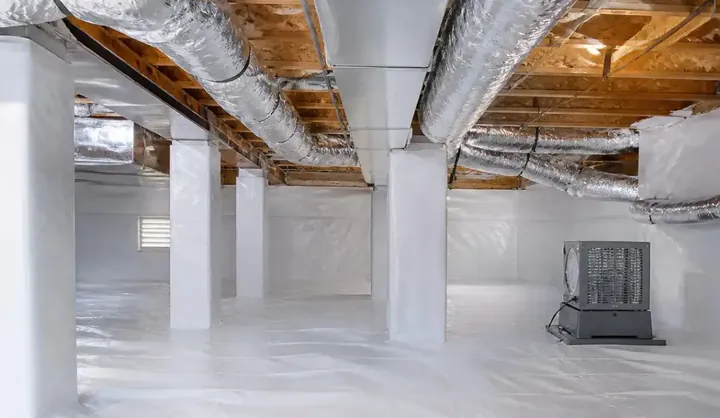
Example crawl space humidity before and after sealing. A sealed, conditioned crawl space targets about 45–55% relative humidity.
- 1,500+ crawl space jobs completed
- 4.9 average homeowner rating
- Licensed and insured
- Locally owned. No call center. You reach the crew.
What your crawl space is doing to your house right now
Most Charleston homeowners never see their crawl space. It is a low, dark gap under the floor, and as long as nothing smells and the floors feel solid, it is easy to forget. The trouble is that the crawl space is not separate from the house. Air moves up through the floor all the time, a process builders call the stack effect, and a large share of the air you breathe upstairs started out under the home. If the air under your house is damp, your living space is breathing damp air.
In Charleston that air is very damp. Summer dew points regularly sit in the 70s, the region collects roughly fifty inches of rain a year, and much of the peninsula and the low ground around the marsh sits only a few feet above sea level. A traditional vented crawl space was designed to let outside air flow through and dry things out. In a climate like ours, that outside air is often wetter than the wood it is supposed to dry. Warm, humid air meets cooler framing and ductwork, condenses, and gives mold and wood rot exactly the conditions they need.
Crawl space encapsulation is the fix that matches the problem. Instead of trying to dry the space with outside air, we close the space off from the ground and from the weather, then control the air inside it. The result is a clean, dry, sealed area under your home that behaves like part of the building envelope instead of an open hole in it.
At Charleston Crawlspace Co, this is the only thing we do all day. Our background is in certified mold inspection and remediation across the Lowcountry, which means we have seen what happens when encapsulation is done badly: liner laid over wet debris, vents left open, no dehumidifier, no drainage plan. We built this company to do it the way it should be done the first time.
Why Charleston crawl spaces fail
Every region has its own way of wrecking a crawl space. Ours has several, and they usually work together.
High groundwater. In many parts of Charleston, the water table sits close to the surface. Bare soil under a home gives off moisture continuously, even when it looks dry on top. A crawl space with an exposed dirt floor can release gallons of water vapor into the space every day.
Tidal and storm flooding. Charleston is used to what locals call sunny-day flooding, where high tides push water into streets with no rain at all. Heavy storms and king tides raise the groundwater under nearby homes too. Crawl spaces on the peninsula, on James Island and along the creeks and marsh edges take the brunt of it.
Humid air through foundation vents. Open vents invite wet outside air into a cooler space. In summer this is the single biggest source of crawl space moisture for homes that are not sitting in standing water. It is also why vents that were added to fix a damp crawl space so often make it worse.
Old foundations and old materials. Charleston has an enormous number of homes built before modern moisture practices. Brick piers, wood framing that was never treated for decay, and crawl spaces that have been opened, patched and re-opened over the decades. Many have never been properly cleaned or sealed.
Pests and organic debris. Wood scraps from construction, old insulation that has fallen, and animal activity all feed mold once humidity climbs. Encapsulating over that debris just locks the problem in, which is why cleaning is part of every job we do.
When these factors combine, you get the symptoms we hear about on the phone every week: a musty smell in the house, floors that feel cold or soft, sagging insulation, rusted ductwork, mold on the joists, higher energy bills, and a house that feels sticky even with the air conditioner running.
Crawl space services in Charleston
Encapsulation is a system, and a good one is made of several pieces working together. We install each piece on its own when that is all a home needs, or as a complete package when the whole space needs to be sealed and conditioned. Pick the service that matches what you are seeing, or call and we will help you sort it out.
Crawl Space Encapsulation
The complete system: sealed liner, closed vents, insulation and a dehumidifier working together.
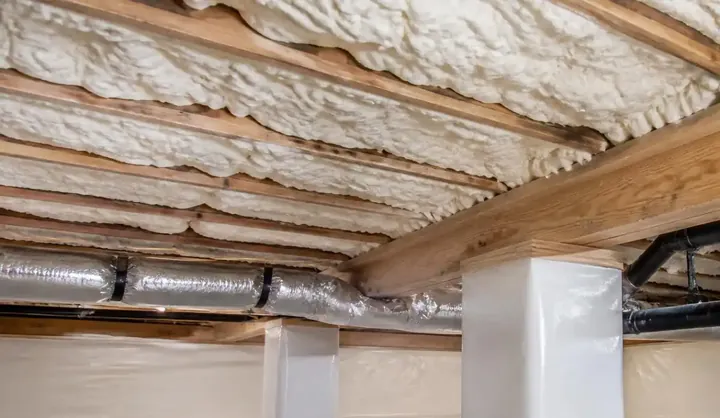
Vapor Barrier Installation
A reinforced liner over the ground, up the walls and around piers, sealed at every seam.
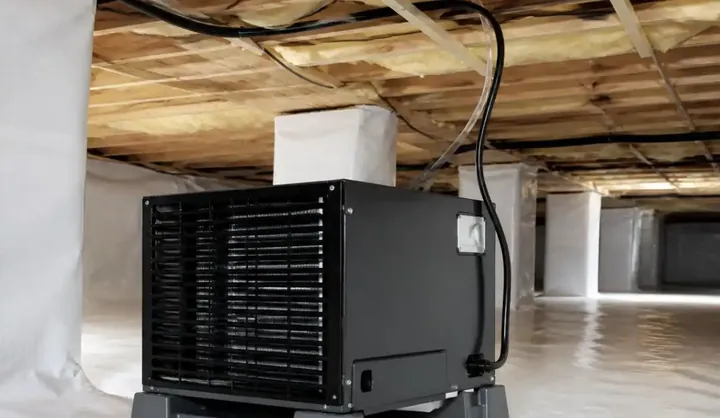
Dehumidifier Installation
A crawl space rated dehumidifier, sized to the space and plumbed to drain, to hold humidity in a safe range.
Crawl Space Insulation
Moisture-tolerant wall and floor insulation built for Lowcountry humidity, not just the cheapest option.
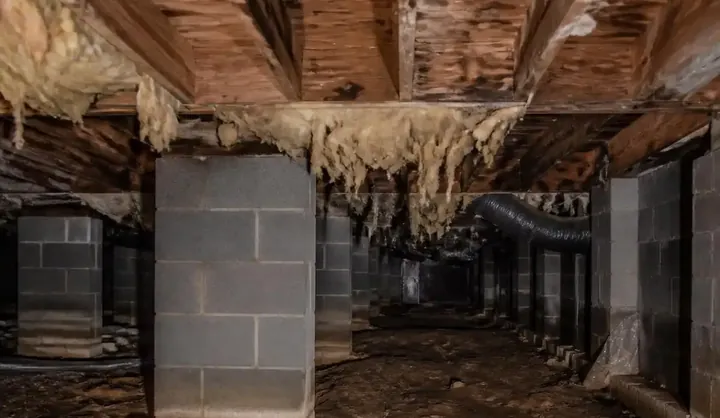
Crawl Space Waterproofing
Stopping real water entry, from seeping walls to standing water, before anything gets sealed or covered.
Drainage & Sump Pumps
Interior drainage and sump pumps that move groundwater out before it reaches your liner or framing.
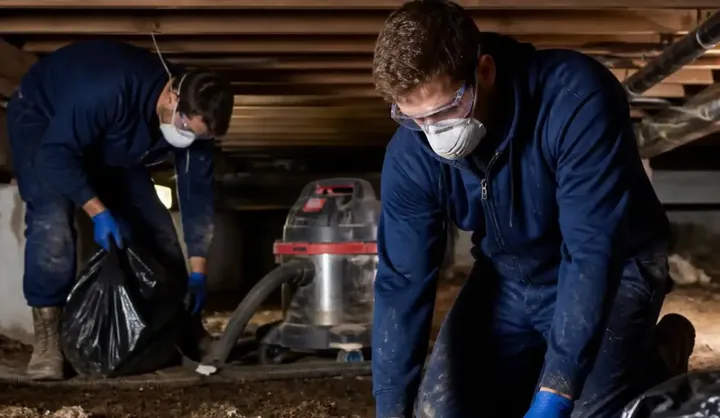
Mold Remediation
Cleaning and treating mold on framing and subfloor, then fixing the moisture so it stays gone.
Crawl Space Repair
Rotted joists, damaged subfloor and failing supports, found and fixed before they cost twice as much.
Vent & Air Sealing
Closing foundation vents and sealing air leaks so humid outside air stops flowing under your house.
Cleanout & Preparation
Removing debris, failed insulation and contamination so the space is clean before it is sealed.
Not sure which of these you need? That is normal. Most homeowners know there is a problem long before they know what it is. A short inspection tells us whether you need a liner and a dehumidifier, drainage work first, structural repairs, or something simpler. We will tell you plainly, including when a smaller job is the right job.
What encapsulation actually includes
People use the word encapsulation loosely, and some companies sell a thin sheet of plastic and call it a day. A proper encapsulation seals the whole space and manages the air inside it. Here is what that means in practice.
A heavy-duty vapor barrier covers the ground and runs up the foundation walls and piers, with seams overlapped and sealed so moisture cannot slip through. Foundation vents are closed and air sealed, because a sealed liner with open vents is a half measure. Walls are insulated where it makes sense, which keeps the space from sweating and helps the floors above stay comfortable. A dehumidifier sized for the space holds humidity in a safe range. Where water is getting in, drainage and a sump pump move it out before the liner goes down.
Each of those pieces has its own page with the details, the materials we use and the questions homeowners ask most. The point to remember here is that they work as a single system. A liner without a dehumidifier will still get damp. A dehumidifier without a sealed space will run forever. Drainage without a liner leaves the air problem untouched.
Our process, start to finish
Every Charleston crawl space is a little different, but the work follows the same order. Doing it in this order is what keeps the result lasting.
- Inspection and moisture reading. We go into the crawl space, check humidity and moisture levels, look at the framing and ductwork, find where water is entering, and photograph what we find. You see the photos and hear the findings in plain language.
- A written plan and quote. You get a clear scope that names what we will install, where, and why. No mystery line items.
- Cleanout and preparation. We remove debris, old failed insulation and anything that can feed mold. If mold is present, we treat it before anything is covered.
- Repairs and drainage. Rotted framing, sagging supports, standing water and drainage problems are handled first. Sealing a space that is still failing structurally is wasted money.
- Vapor barrier installation. The liner goes down over the ground and up the walls and piers, with overlapped, sealed seams and sealed penetrations.
- Sealing and insulation. Vents are closed and air sealed. Wall insulation is installed where the plan calls for it.
- Dehumidifier installation. We install a unit sized to the volume of the space, plumbed to drain.
- Final walkthrough. We show you the finished space, explain how to monitor it, and tell you what to watch for over the next season.
What we find under Charleston homes
After enough crawl spaces, patterns repeat. These are the findings that send homeowners to the phone.
A musty smell upstairs. That smell is not coming from the walls. It is usually mold or mildew under the floor, pulled into the living space by the stack effect.
Wet or sagging insulation. Fiberglass batts hold moisture and fall away from the floor above. Once they are damp they stop insulating and start holding water against the wood.
White or black growth on joists and subfloor. Surface mold on framing is common in vented crawl spaces and is a sign humidity has stayed too high for too long.
Standing water or damp soil. If you can see water, the space needs drainage before it needs anything else.
Rusted ducts and fasteners. Metal corrodes when it sweats. Rust on ductwork or hangers is a reliable sign of moisture.
Soft spots, bouncy floors or doors that stick. These point to wood that has absorbed moisture long enough to weaken, and sometimes to settled piers. This is where crawl space repair comes in before encapsulation.
Pest activity. Termites, rodents and other pests favor damp, undisturbed spaces. Cleaning and sealing remove a lot of what draws them in.
If you recognize any of these, do not wait for a bigger symptom. Crawl space problems compound. A damp space leads to mold, mold leads to rot, and rot leads to structural repair.
Charleston neighborhoods we serve
Where you live in Charleston changes what is going on under your house. A pre-war home south of Broad faces different conditions than a 1950s ranch in West Ashley or a newer house on Daniel Island. We work across the city's neighborhoods and tailor the plan to the home, the soil and the flood exposure on your street.
Downtown Peninsula
- South of Broad
- Harleston Village
- Ansonborough
- Cannonborough-Elliotborough
- Wagener Terrace
- Hampton Park Terrace
West Ashley
James Island
Daniel Island
Each neighborhood page covers the housing, the ground conditions and the crawl space problems we see most often in that part of town. If you do not see your neighborhood, call anyway. We serve the greater Charleston area and can tell you quickly whether we can get to you.
What crawl space encapsulation costs in Charleston
Price is the first question on nearly every call, and it deserves a straight answer. The cost depends on the size of the crawl space, the condition it is in today, how much cleanout it needs, whether drainage is required, and how much insulation and sealing the plan includes. A dry, fairly clean space is the low end. A space with standing water, heavy debris or active mold is the high end.
We published planning ranges on our crawl space encapsulation cost guide, including a simple estimator you can use before you call anyone. Those numbers are a starting point. The real quote comes after we see the space, because two homes with the same square footage can need very different work.
Why homeowners call Charleston Crawlspace Co
You talk to the crew, not a call center. When you call, the person on the other end works on crawl spaces in Charleston. They know the neighborhoods, the flooding patterns and the housing stock.
Mold experience comes first. Our background in certified mold inspection and remediation means we do not seal over problems. We find them, treat them and fix the cause.
We do the whole system. Liner, vents, insulation, dehumidifier, drainage and repairs. You do not need to coordinate three contractors who each blame the other when something is still damp.
Honest scopes. If a smaller job will solve your problem, we will say so. If you need drainage or structural work before anything else, we will explain why and show you what we found.
Locally owned and operated, licensed and insured. We live here. A crawl space job that fails is a job we get to hear about at the grocery store.
Frequently asked questions
What is crawl space encapsulation?
Crawl space encapsulation seals the space under your home from ground moisture and outside humid air. It uses a heavy-duty vapor barrier on the floor and walls, sealed vents, insulation where appropriate and a dehumidifier to hold humidity in a safe range. The goal is a clean, dry space that no longer feeds moisture into the house above.
Is encapsulation worth it in Charleston?
For most Charleston homes with a crawl space, yes. Our climate combines high humidity, heavy rain and a shallow water table, which is the exact situation encapsulation is designed for. It is most valuable when you already have a musty smell, mold, wet insulation, rusting ductwork or high energy bills, but it also protects homes that look fine now and are not yet showing symptoms.
Do I need to close my crawl space vents?
In most cases, yes. Open vents let humid outside air into a cooler space where it condenses. Building codes in South Carolina follow the International Residential Code, which allows unvented, conditioned crawl spaces when specific requirements are met, such as a continuous vapor retarder and dehumidification or conditioned air. We close and air seal vents as part of encapsulation.
How long does encapsulation take?
Many homes can be completed in a few days, depending on size and condition. Cleanout, drainage work, mold treatment and repairs add time. We give you a timeline with your written plan after the inspection.
Will encapsulation get rid of mold?
Encapsulation controls the conditions mold needs, but existing mold should be treated before the space is sealed. We clean and treat affected areas first, then seal and dehumidify so the problem does not return. See our crawl space mold remediation page for details.
Can I encapsulate a crawl space that floods?
Yes, but water has to be dealt with first. A liner will not stop standing water, and sealing a space that floods without drainage invites trouble. We install drainage and a sump pump when the space needs it, then seal over a dry foundation. See crawl space drainage and sump pumps.
Will it help my energy bills?
Often, yes. A sealed and insulated crawl space reduces the humid air your cooling system has to fight and keeps the floor above closer to the temperature of the house. Results vary by home, ductwork and insulation, so we do not promise a specific savings number.
How do I get an inspection scheduled?
Call (877) 720-8173. Tell us your neighborhood and what you are seeing, and we will get an inspection on the calendar.
Ready to find out what is going on under your home? Call and talk to a local crawl space pro.
Call (877) 720-8173Trusted by Charleston homeowners
Join them. Call (877) 720-8173 and talk to the crew.
Find out what is happening under your Charleston home
Call and you reach the crew that does the work, not a call center. Tell us your street or neighborhood and what you are seeing, and we will tell you what to expect.