
Crawl space encapsulation in Wagener Terrace
Wagener Terrace is a residential neighborhood on the upper peninsula, tucked beside Hampton Park and the tidal edge of the Ashley River. It is known for its tree-lined streets, front porches and easygoing neighborhood feel, and it has been a popular place to buy and renovate for years.
The homes here are mostly modest, mostly wood-framed and mostly built on crawl spaces. Over the decades those crawl spaces have taken on water and humidity, and many have been left alone. We help owners fix the cause, clean up what has built up and seal the space so that porch-front charm is not undermined from below.
What makes Wagener Terrace crawl spaces different
Wood-frame homes on piers. Most houses here are light wood construction on brick or block piers, with vented crawl spaces. Without the heavy masonry of older downtown districts, the framing is more exposed to damp air.
Flat, low ground. The neighborhood is level and low, with little natural slope to carry water away. After heavy rain, water can linger in yards and under houses.
Tidal influence. The Ashley River side of the peninsula affects groundwater levels, especially during king tides and storm surge.
Mature trees and shade. Large oaks and thick shade keep soil under houses cool and damp, slowing the drying that sun would otherwise provide.
A mix of renovated and original homes. Some houses have been updated thoroughly. Others have changed little in decades, leaving old insulation, old plumbing and original supports in place.
Homes in Wagener Terrace
Most Wagener Terrace homes date from the early to mid twentieth century. You will find bungalows, cottages, small frame houses with front porches and modest two-story homes. Many have been expanded with rear additions, enclosed porches and second-floor dormers.
Underneath, the story is consistent. Brick or block piers hold up wood beams and joists, with foundation walls or lattice enclosing the sides and vents allowing air through. Additions often introduce changes in height, material or support. Ductwork added later for central air runs through the crawl space, and its insulation and seals vary widely in quality.
Because the houses are relatively small, crawl space projects here are often more manageable in scale than in larger homes. But the same moisture problems apply, and they tend to show up in the same places: under bathrooms and kitchens, along exterior walls and near vents.
Water, soil and flood conditions in Wagener Terrace
Standing water after rain. Low spots in yards and under houses can hold water for days, especially after summer thunderstorms and tropical systems.
High water table. Groundwater is close to the surface across much of the neighborhood, which means bare soil continually gives off moisture.
King tides and storm surge. High tides push water into storm drains and low streets, and groundwater rises with them.
Humid summers. Dew points in the 70s drive condensation onto ductwork and framing in vented crawl spaces.
Runoff from neighboring properties. On flat lots, water moves slowly and finds its way toward foundations.
Crawl space problems we see in Wagener Terrace
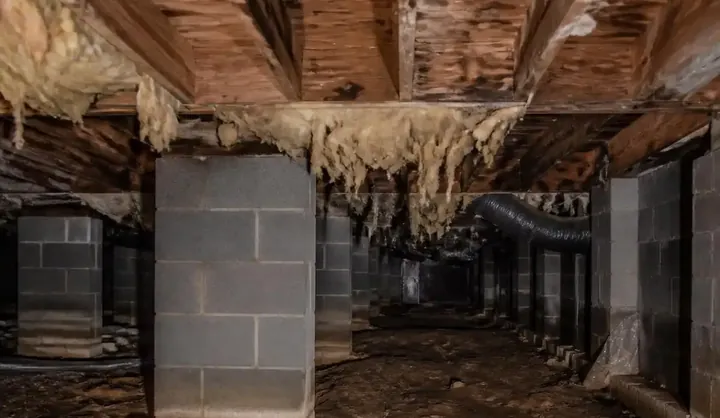
- Wet fiberglass batts hanging or fallen under the floor
- Thin plastic laid over damp soil, torn or incomplete
- Mold on joists and subfloor, especially near foundation vents
- Rusted and sweating ductwork under older homes with newer HVAC
- Rot at sill plates and where wood meets damp masonry
- Sagging beams and joists from long-term moisture
- Settled or cracked piers
- Termite and pest activity
- Floors that feel cold, soft or springy and doors that stick in humid months
What we usually recommend in Wagener Terrace
Cleanout and moisture assessment. We clear the debris and failed insulation and look hard at where the water is coming from. See cleanout.
Drainage for the low spots. Where water collects, we install drainage and a sump pump before sealing.
Mold treatment. Growth on framing is cleaned and treated. See mold remediation.
Framing and pier repairs. Soft wood and unstable piers are repaired. See crawl space repair.
Liner, sealed vents and dehumidification. A reinforced vapor barrier, vent sealing and a dehumidifier stabilize the space.
Insulation upgrade. Moisture-tolerant insulation replaces soaked batts, and ductwork benefits from being inside the sealed space.
The full system is crawl space encapsulation, sized to the house.
The process in a Wagener Terrace home
- Inspection. We check moisture, framing, piers, ductwork and access, and photograph what we find.
- Plan. You receive a written scope and price.
- Cleanout, treatment and repairs. The space is cleaned, mold is treated and damaged wood is fixed.
- Drainage. Pumps and channels go in where needed.
- Sealing. Liner, vents and penetrations are sealed.
- Conditioning. Insulation and a dehumidifier complete the job.
- Walkthrough. We review the result with you.
A closer look at Wagener Terrace
Wagener Terrace has the feel of a neighborhood people choose on purpose. Porches face the street, neighbors know each other and many houses have been lovingly renovated by owners who plan to stay. That attention to the house is exactly why crawl space problems frustrate people here. A beautifully refinished floor on top of a damp, moldy crawl space is a disappointment waiting to happen.
The housing stock is mostly bungalows and cottages with a vented crawl space under the whole footprint. Foundation vents were installed generously, since builders of the era believed more air meant more dryness. In a humid climate the opposite is true, and in the summer those vents act like open windows for damp air. Add flat lots, shade and a tidal river nearby, and it is easy to see why nearly every house we inspect in the neighborhood has some level of moisture.
The reassuring part is how well these homes respond. The framing is usually sound, the spaces are accessible and the projects are well-defined. Most Wagener Terrace crawl spaces move from damp and musty to dry and stable in a few days of work.
Keeping a Wagener Terrace crawl space healthy
After encapsulation, the routine is short. Look at the dehumidifier a couple of times a year. Keep gutters clean and make sure downspouts carry water well away from the foundation. Trim shrubs back from the house so air and light reach the perimeter. Check the access door seal occasionally. And if you ever see standing water, call us rather than waiting for the next rain, because wet soil under a sealed liner can hide a drainage problem for a long time.
Why Wagener Terrace owners call us before they sell or renovate
Two moments send Wagener Terrace owners to the phone more than any other: a pending sale and a planned renovation. Before a sale, a buyer's inspector often flags moisture under the house, and sellers want it handled with documentation rather than a price reduction. Before a renovation, owners realize that new floors, new plumbing or a new HVAC system will sit on top of the same damp crawl space unless the foundation work comes first. In both cases, the sensible order is the same: fix the crawl space, then build on it.
Local rules and practical notes
Historic review. Parts of the neighborhood fall within local historic or conservation overlays. Most of our work happens inside the foundation, and we seal vents from the inside so the exterior look stays the same. If your project touches exterior features, check with the city first.
Flood zones. Many Wagener Terrace properties are in mapped flood zones. If your home has engineered flood vents, confirm requirements before altering them.
Lot access. Most lots are easy to work on, but fences, mature trees and tight side yards can limit access. We plan the route in advance.
What crawl space work costs in Wagener Terrace
Cost depends on the size of the house, access, the amount of debris, whether drainage is needed and what repairs the framing requires. Smaller houses with dry crawl spaces are straightforward. Those with standing water, rotted framing and heavy debris cost more. We quote after inspection. See our cost guide for planning ranges. Neighbors in Hampton Park Terrace and Cannonborough-Elliotborough deal with related conditions.
Frequently asked questions
My Wagener Terrace house has a musty smell. Is it the crawl space?
Often, yes. Crawl space air moves into the living space through floors and gaps. Damp soil, wet insulation and mold under the floor are common sources.
Do small houses really need full encapsulation?
If the crawl space is damp, yes. The moisture dynamics are the same regardless of size. Smaller spaces are often quicker to seal.
Can you fix a crawl space that gets standing water?
We can install drainage and a sump pump to manage it, and then seal the space. No system can guarantee a dry space in a major flood.
I have newer HVAC under an older house. Will sealing help?
It often does. Bringing the crawl space inside the thermal envelope reduces condensation on the ductwork.
Will encapsulation help with termites?
It removes the damp, hidden conditions pests prefer, but it is not a termite treatment. Keep regular inspections.
How do I get an inspection?
Call (877) 720-8173, tell us your street and describe what you are seeing.
Own a Wagener Terrace home with a damp crawl space? Call and we will take a look.
Call (877) 720-8173