
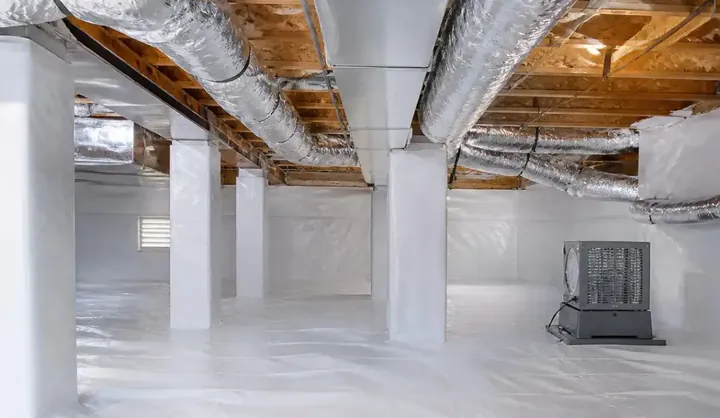
Crawl space encapsulation in Riverland Terrace
Riverland Terrace is a James Island neighborhood known for its mature live oaks, quiet streets and proximity to the tidal creeks and marsh. Many of its homes date from the mid twentieth century, and the neighborhood has become popular with buyers who want a close-to-downtown feel with a more relaxed pace.
The same creeks and trees that make it attractive also make it humid. Crawl spaces here have to deal with tidal groundwater, heavy shade and the Lowcountry's summer air. We help owners control all three.
What makes Riverland Terrace crawl spaces different
Creek and marsh proximity. Tidal influence is strong, and groundwater rises and falls with the tides.
Heavy tree canopy. Live oaks and other trees keep soil shaded and damp, and drop debris.
Mid-century and older homes. Many were built before modern moisture control, with vented crawl spaces.
Low-lying lots. Some sections of the neighborhood sit low and take on water in storms.
Island conditions. James Island is surrounded by water, and storm surge can affect much of it.
Homes in Riverland Terrace
Riverland Terrace includes ranches, cottages, bungalows and some larger custom homes. Many have been renovated or expanded, with additions that change foundations and airflow.
Typical foundations are brick or block piers with skirt walls, or perimeter walls with vents. Ductwork, plumbing and electrical lines run through the crawl space, and quality varies. Many houses have moisture issues at specific points, like bathrooms and kitchens.
Water, soil and flood conditions in Riverland Terrace
Tidal groundwater. High tides and storms raise water tables.
Standing water after rain. Low lots collect water.
Soil that stays wet under shade. Little sun reaches the ground under dense canopy.
Humid summers. Vented crawl spaces take in damp air.
Storm surge exposure. Many properties are in mapped flood zones.
Crawl space problems we see in Riverland Terrace
- Wet insulation and mold on joists
- Standing water or very damp soil
- Roots and organic debris
- Thin or failed ground plastic
- Rusted ducts and fasteners
- Rot at sills and joist ends
- Sweating pipes and ductwork
- Pest activity
- Musty odor and cold floors
What we usually recommend in Riverland Terrace
Drainage first when needed. See drainage and sump pumps and waterproofing.
Cleanout and mold treatment. See cleanout and mold remediation.
Repairs. See crawl space repair.
A sealed system. Vapor barrier, vent sealing, dehumidifier and insulation.
The combined result is crawl space encapsulation.
What an inspection and job look like in Riverland Terrace
The inspection. We look at the trees, the grading and the creek side of the lot before going under the house, since shade, roots and tide all shape what is happening below the floor. We take humidity and wood moisture readings, photograph the framing, piers, ducts and soil, and look for the source of any water. You see the photos and hear what we found in plain language before anything is quoted.
The written plan. You receive a scope that names each step, each material and the order of work. Because many houses here have been expanded over the years, the plan includes the seams between additions and the original structure.
Cleanout, treatment and repairs. Debris and failed insulation come out, mold is treated and damaged wood is repaired. Roots near access points and foundations are worked around carefully, and we keep equipment off root zones where we can.
Drainage and water control. Where water collects or groundwater reaches the space, we install drainage and a sealed sump basin before anything is covered.
Sealing and conditioning. A reinforced liner goes down with sealed seams, vents and penetrations are closed and a dehumidifier sized to the space goes in, with insulation where the plan calls for it.
The walkthrough. We walk you through the finished space, show you the liner, the sealed vents and the dehumidifier, and explain how the system behaves through the seasons.
A closer look at Riverland Terrace
Riverland Terrace feels like a neighborhood that was planted rather than built. Live oaks arch over the streets, houses sit back on deep lots and the creeks are never far away. Mid-century ranches stand beside older cottages and newer renovations, and the character of the place comes largely from how the houses sit among the trees.
Below the floor, that same canopy has consequences. Little sun reaches the soil, so ground moisture evaporates slowly and stays in the crawl space. Leaves, acorns and small branches work their way under houses and break down into organic material that feeds mold. Roots grow toward moisture, and sometimes toward the foundation itself. And the creek-side lots sit lower than the rest, with groundwater that rises with the tide.
The good news is that these conditions respond well to the right approach. Cleaning out organic debris, sealing the ground, closing the vents and conditioning the air removes most of what makes the crawl space a problem. Where the lot is low and water collects, drainage adds a layer of protection that nothing else can replace.
What owners in Riverland Terrace tell us
The conversations we have with Riverland Terrace owners tend to follow a few patterns. People love the neighborhood and plan to stay. They have renovated the inside, sometimes more than once. And they have noticed something that does not add up: the house smells faintly of damp even though the interior looks perfect, the floors are cold in winter, or the air conditioner never quite keeps up in August.
Those symptoms usually trace back to the crawl space, and the fix is usually less disruptive than people expect. The work happens under the house, the interior is not disturbed and the result is something you can feel within a season: steadier humidity, fewer musty days and floors that feel closer to the temperature of the room.
A typical project in Riverland Terrace
Riverland Terrace projects are shaped by the trees and the tide. We start by looking at where the roots are, how the lot drains and which side of the house faces the creek. Then we go under the house to see what has collected: leaves, acorns, branches, nesting material and old insulation.
Cleanout is usually thorough. Organic debris is the food source for mold, and in a shaded crawl space there is often a great deal of it. After cleaning and treatment, we repair any damaged wood, then address drainage if the lot is low. The liner, vents, insulation and dehumidifier follow.
Because many homes here have been expanded, we spend time at the seams between additions and original foundations, making sure the barrier is continuous.
Keeping a Riverland Terrace crawl space healthy
In the fall, keep leaves away from the foundation and vents. Check gutters and downspouts. Keep a battery backup on any sump pump. Check the dehumidifier at the start of summer. If roots begin to lift or crack a foundation wall, call before it worsens. And after storms, look for water and new staining.
Protecting the trees while protecting the house
Riverland Terrace owners care about their oaks, and so do we. Heavy equipment and careless access can damage root zones, so we plan routes and staging to avoid them. If drainage work requires digging near a tree, we choose alignments that minimize disturbance. And if roots have already grown into or against the foundation, we document it and discuss options with you rather than cutting anything without your approval. Protecting the house should not cost you the canopy that makes the neighborhood what it is.
Local rules and practical notes
Flood zones. Check requirements before altering engineered flood vents.
Trees. Protected trees may be subject to local rules. We work around roots and avoid damaging trees.
Power backup. Consider a battery backup for any sump pump.
What crawl space work costs in Riverland Terrace
Cost depends on size, water, debris and repairs. We quote after inspection. See the cost guide. Nearby Wappoo Heights and Secessionville have related conditions.
Frequently asked questions
Will my live oaks affect the crawl space?
Shade and debris contribute to dampness. Roots can also affect foundations. A sealed, dehumidified space compensates.
Is my lot too low for encapsulation?
Not usually. Drainage and a pump may be part of the plan.
Does the creek make it worse?
Tidal groundwater and humidity do increase the load, which is why drainage and dehumidification matter.
Can you protect my landscaping?
We take care to.
How long will it last?
A properly installed system lasts for years. Equipment may need service.
How do I schedule an inspection?
Call (877) 720-8173.
Own a Riverland Terrace home? Call and we will inspect the crawl space.
Call (877) 720-8173