
Humidity and water are different problems
When Charleston homeowners say their crawl space is damp, they could mean two very different things. One is humidity: moist air, condensation, musty smell, mold on wood. The other is water: standing puddles, wet soil that stays wet, streaks on the foundation wall, or water that appears after storms.
Humidity is solved by sealing the space and controlling the air. Water has to be stopped, redirected or pumped out. If you treat a water problem as a humidity problem, the vapor barrier floats, the dehumidifier runs forever and the mold comes back. That is why waterproofing comes before encapsulation whenever water is actually entering.
Crawl space waterproofing is the set of measures that keep liquid water out of the space or move it out quickly: managing water outside the home, sealing entry points in the foundation, and installing drainage and pumps inside when needed.
Why Charleston crawl spaces take on water
Charleston has built-in conditions that push water toward foundations.
A high and shifting water table. Across the peninsula, James Island, West Ashley and the marsh edges, groundwater is often only a few feet below the surface. After heavy rain or a king tide, it rises and can reach the base of crawl space walls and the soil inside.
Tidal and storm flooding. Charleston is used to flooding that does not require rain. High tides push into streets and yards, and storm surge and heavy storms raise the water table across neighborhoods. Homes near the Ashley, the Cooper, the Wando and the creeks feel this more directly.
Flat lots and poor grading. Many Lowcountry lots are flat. If the yard drains toward the house instead of away, water collects against the foundation and finds its way in.
Gutters, downspouts and roof runoff. Downspouts that discharge next to the foundation dump hundreds of gallons into the soil during a single storm.
Aging foundations. Brick piers, old mortar, cracked block and old pipe penetrations all give water a path. In historic homes, foundations that were built to let water flow through are now tied into modern yards with different drainage.
Plumbing leaks. Not every wet crawl space is groundwater. A slow supply or drain leak can saturate soil and framing for months before anyone notices.
What waterproofing includes
The right combination depends on where the water is coming from. We start by identifying the source and then build the fix around it.
Identifying the source. We look for stains, mineral lines and water marks on walls and piers, check the soil, trace the flow during or after rain when possible and inspect plumbing, gutters and grading. Guessing is how people end up paying twice.
Exterior water management. Many crawl space water problems start outside. We point out grading, gutter and downspout fixes that move roof and yard runoff away from the foundation. Some of this you can do yourself, and some needs a landscaper or drainage contractor.
Sealing foundation entry points. Cracks, failed mortar, gaps around pipes and other openings in the foundation are sealed with materials suited to the surface.
Interior drainage. Where groundwater reaches the space, we install a drainage system under or along the edge of the liner that collects water and directs it to a sump pit. See drainage and sump pumps.
Sump pump installation. A pump in a sealed pit removes collected water before it can reach the space above the liner. We discuss backup options for homes in areas that lose power during storms.
Vapor barrier over the top. Once the water is dealt with, a vapor barrier goes over the ground and up the walls, tied into the drainage system.
Signs you need crawl space waterproofing
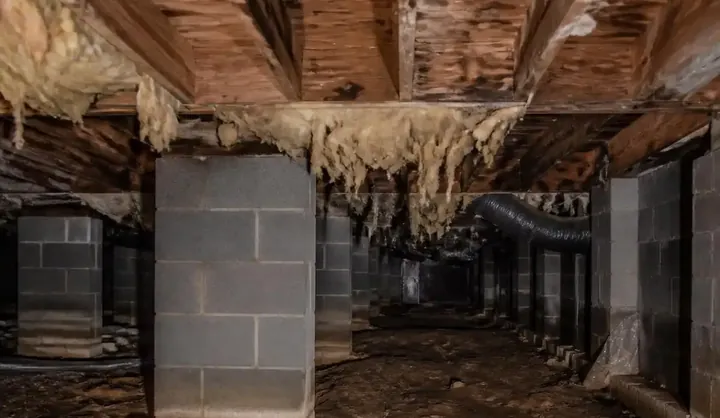
Look for evidence of liquid water, not only moisture in the air.
- Standing water or puddles after rain or a high tide
- Soil that stays wet or muddy for days
- Water stains, tide lines or mineral deposits on piers and walls
- Efflorescence, a white chalky residue on masonry
- Streaks or trickles on the foundation walls
- A liner or plastic floating or holding water on top
- Wood rot at the base of posts or the bottom of sill plates
- A musty smell that gets much worse after storms
- Rust on the bottom of metal supports
Our waterproofing process
- Inspect and trace the water. We find the source, document it and explain what we see.
- Plan the fix. You get a written scope covering exterior recommendations, interior drainage, pumps and sealing.
- Clear the space. Standing water is removed and the cleanout is completed.
- Install drainage and pump. Channels, pit and pump go in if needed.
- Seal the foundation. Cracks and openings are repaired.
- Cover and condition. Liner, vent sealing, and dehumidifier complete the work as part of encapsulation.
- Test and walk you through. We test the pump and show you how it works.
Why a vapor barrier alone does not waterproof a crawl space
A liner is designed to stop vapor, not to hold back flowing or standing water. If water is entering, a liner will do one of three things: collect water on top of it, let water seep under it and lift it, or tear and trap water against the ground. None of those solve the underlying problem. A liner with no drainage can make a wet crawl space look dry while moisture accumulates in places you cannot see.
Charleston-specific factors we plan for
Flood zones. Many Charleston properties sit in FEMA flood zones. Waterproofing works to manage groundwater and runoff, but it is not flood protection. In a major storm surge, no interior system will keep water out entirely, and flood insurance questions are best discussed with your insurer.
Tidal swings. Homes close to tidal creeks can see groundwater rise and fall with the tide. Drainage and pump systems for these homes need to handle recurring rather than occasional loads.
Soil conditions. Sandy soils drain quickly and can clog drainage systems with fine sediment. Clay-heavy pockets hold water. We adjust the system to what is under your yard.
Historic homes. Older homes may have crawl spaces designed to breathe. Changes to foundations and drainage should respect the building, and we recommend checking with your local historic review board if work affects exterior features in a historic district.
What crawl space waterproofing costs in Charleston
Waterproofing cost varies a lot, because it depends on the source and the solution. Sealing a few cracks and redirecting a downspout is inexpensive. A full interior drainage system with a sump pit and pump is a larger project, and difficult access, high water volume and lot conditions all add to the price. Our cost guide shows planning ranges for drainage and pumps as add-ons, and the inspection gives you a real figure for your home.
Why Charleston homeowners choose us
We spend our days in crawl spaces from the peninsula to West Ashley, James Island and Daniel Island, and we have seen how differently water behaves from one street to the next. We find the source, fix it and then seal the space so the result lasts. Our background in mold inspection and remediation also means we pay close attention to what water has already done to the wood and insulation above it.
What you can do outside the house right now
Some water problems begin with simple outdoor conditions you can check this week, whoever you end up hiring.
- Make sure gutters are clean and downspouts discharge at least several feet from the foundation
- Look at the grading and make sure soil slopes away from the house
- Check for low spots where water collects next to the foundation
- Make sure air conditioner condensate lines drain away from the house
- Keep planters, mulch and soil from piling up against siding or foundation vents
- Look for leaking hose bibs and irrigation heads near the foundation
These steps do not replace interior drainage when groundwater is the problem, but they often reduce the load and sometimes solve smaller issues outright.
Frequently asked questions
Is waterproofing different from encapsulation?
Yes. Waterproofing stops liquid water. Encapsulation seals the space against vapor and air and controls humidity. Many homes need both, in that order.
Can you waterproof a crawl space that floods during storms?
We can reduce water entry and install drainage and a pump to manage it, but no crawl space system can guarantee it will stay dry in a major flood event.
Do I need a sump pump?
If groundwater collects in the space, usually yes. If the problem is humidity only, usually no. We determine that at inspection. See sump pump installation.
What if the water is coming from a plumbing leak?
Then the fix is a plumber, and we will tell you so. After the leak is repaired, we can dry and treat the space.
Will waterproofing remove mold?
Not by itself. Water control stops the cause, but existing mold needs treatment. See mold remediation.
Can I fix this myself with gutters and grading?
Sometimes outside fixes solve part of the problem, and we will point them out. If water is still reaching the crawl space after those, interior drainage may be needed.
Seeing water under your home? Call and we will find out where it is coming from.
Call (877) 720-8173