
Crawl space encapsulation in Harleston Village
Harleston Village sits on the west side of the Charleston peninsula, around the College of Charleston and Colonial Lake, bounded roughly by King Street, Calhoun Street and the Ashley River side of downtown. It is a lively mix of residential streets, student housing, historic churches, shops and some of the city's most photographed houses.
Under a lot of those houses is a crawl space that has had a hard life. Homes here have been rented, divided, renovated, patched and left alone in cycles for generations. The space below the floor often reflects that history: old insulation, tangled utilities, scraps from past repairs, open vents and bare soil. We help owners clean up and seal these crawl spaces so the damp stays out of the structure.
What makes Harleston Village crawl spaces different
Rental and multi-unit conversions. Many homes have been converted to apartments or are used as student rentals. More plumbing, more ductwork and more people mean more places for leaks, condensation and neglected maintenance.
Layers of past work. Houses here have had decades of patching. It is common to find several generations of plumbing, abandoned lines, old wiring, discarded materials and mismatched supports in the same crawl space.
Absentee owners and deferred maintenance. When a house is rented out for years, the crawl space is the last thing anyone checks. Small problems become large ones before they show up upstairs.
Low ground near the water. Colonial Lake, the Ashley River and tidal drainage all shape groundwater in this part of the peninsula.
Mixed construction. Wood-framed houses on piers, brick foundations, additions on slabs and raised porches can all appear on one block.
Homes in Harleston Village
Harleston Village was laid out in the early 1800s and built out through the nineteenth century. The streets include Charleston single houses, Greek Revival and Italianate homes, historic row houses and larger mansions. Interspersed are renovated cottages, later infill and multi-unit buildings.
The result is a wide range of foundations. Some homes sit on raised brick piers with open air beneath. Others have masonry foundation walls with enclosed crawl spaces. Additions often sit on different foundations from the original structure, with a dividing line under the floor where the old meets the new. That can create transitions where moisture and air move in unexpected ways, and where an installation has to be planned around the building rather than a template.
Water, soil and flood conditions in Harleston Village
Harleston Village is low, and large parts are close to tidal water.
Rain and street flooding. Heavy rain can pond on streets near Colonial Lake and the lower blocks, pushing water against foundations.
Tidal influence. High tides raise groundwater across the peninsula, and the western side near the Ashley River is no exception.
A shallow water table. Bare soil under houses releases moisture continuously, which the warm climate turns into humid air in the crawl space.
Old drainage. The peninsula's older stormwater system can be slow to clear water after heavy storms, leaving yards and crawl spaces damp longer.
Shade and tree cover. Mature trees and tight lots mean soil under houses stays shaded and slow to dry out.
Crawl space problems we see in Harleston Village
- Wet fiberglass insulation that has fallen onto the soil
- Mold on joists and subfloor, especially near old plumbing and in rooms below bathrooms and kitchens
- Abandoned lines, debris and discarded materials left under the house
- Rusted ducts, hangers and cast iron drain lines
- Slow plumbing leaks soaking framing in rental units
- Lifted, torn or missing plastic from earlier attempts at a liner
- Open vents and bare soil pumping humid air into the floor system
- Termite and pest activity in undisturbed corners
- Floors that bounce, slope or feel damp in older rooms
What we usually recommend in Harleston Village
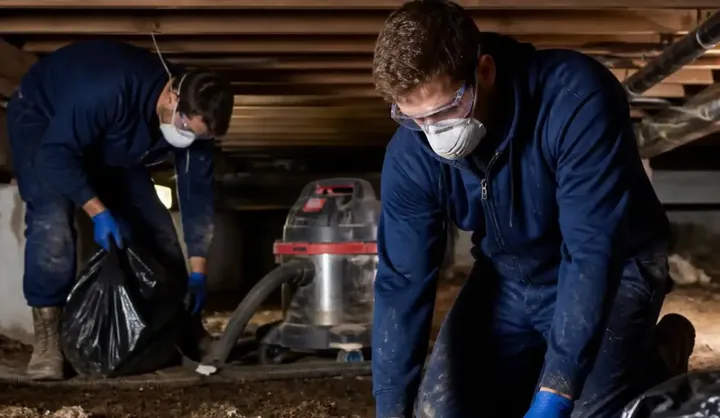
A full cleanout first. Decades of debris and failed material mean most Harleston Village crawl spaces start with a thorough cleanout, including old insulation, abandoned materials and contaminated areas, followed by mold treatment where needed.
Plumbing leak check. In older and multi-unit homes, we look for active leaks and tell you when a plumber needs to be involved before sealing.
Repairs. Where moisture has damaged joists, sills or subfloor, we reinforce or replace as needed. See crawl space repair.
Water control. Where groundwater collects, we plan drainage and a sump pump around access and discharge options.
Liner, sealed vents and conditioning. A sealed vapor barrier, vent sealing and a dehumidifier turn the space from a source of moisture into a stable part of the house.
Together, this is full crawl space encapsulation, adapted to the building and scheduled around tenants where needed.
Working in Harleston Village: what to expect
- Inspection. We map the crawl space, note transitions between old and new construction, take readings and photograph findings.
- Written plan. You get a scope that explains each step and why it is needed.
- Scheduling that works for occupied homes. For rentals and multi-unit buildings, we coordinate access and timing with owners and, where appropriate, tenants.
- Cleanout, repairs and water control. Debris is removed, damage is corrected and drainage is installed where needed.
- Sealing and conditioning. Liner, vents, insulation and dehumidifier complete the job.
- Walkthrough. We show you the finished space and explain how to maintain it.
A typical project in Harleston Village
A typical Harleston Village job starts with a conversation about who lives in the house. A single-family home with one owner is straightforward. A divided house with tenants on two floors, a landlord out of state and a plumber on call for the third time this year needs a plan for access, notice and sequence. We handle that coordination, because crawl space work is only as smooth as the logistics around it.
Once we are under the house, the first hour usually tells the story. Abandoned pipe, old wire and scraps from three generations of repairs come out first. Then we trace the plumbing, because in buildings with several bathrooms and kitchens, small leaks are the rule rather than the exception. Anything active gets reported to you before we seal a thing, so the liner is never laid over a wet problem.
After cleaning and repairs, the space goes through the same sequence as any other: drainage if needed, a continuous liner, sealed vents, insulation and a dehumidifier. Because many Harleston Village buildings have several foundation sections of different ages, we pay special attention to the lines where one meets another.
Keeping a Harleston Village crawl space healthy
Rental owners in particular benefit from a simple routine. Check the dehumidifier twice a year, confirm that the drain is clear and look at the liner when a plumber or HVAC technician has been under the house. Ask contractors to leave the space as they found it, and call us if anything is torn. A short note in your property file with the date of the work and the photographs we provide gives you documentation for inspections, insurers and future buyers.
Local rules and practical notes
Historic districts. Much of Harleston Village is within Charleston's historic districts. Work inside the foundation generally does not change the exterior, and we seal vents from the inside for that reason. If anything affects the visible exterior, check with the city's design review process before work begins.
Rental properties. If you own a rental, a documented, clean, dry crawl space protects your investment and can help with inspections and tenant complaints about odors and air quality. We can provide photographs and a written description of the work.
Flood zones. Many properties are in mapped flood zones. Confirm flood vent requirements with your insurance agent or the floodplain office before closing vents on a home that has engineered vents.
Tight lots and access. Narrow side yards and small access doors are common. We plan equipment and material routes in advance.
What crawl space work costs in Harleston Village
Cost depends on access, the amount of debris, the number of units or levels, any plumbing or framing repairs and whether drainage is needed. A tidy, accessible space is straightforward. A crawl space that has collected decades of debris, abandoned lines and moisture damage costs more. We quote after inspection. See our cost guide for planning ranges. Homes in South of Broad and Cannonborough-Elliotborough often share similar conditions.
Frequently asked questions
I own a rental in Harleston Village. Can you work around tenants?
Yes. We coordinate timing and access, and most of the work happens in the crawl space rather than inside the units.
My house has been renovated, but the crawl space never was. Is that common?
Very common. Interior renovations often leave the crawl space untouched, which is why damp, mold and rot continue underneath fresh finishes.
Can you find leaks under the house?
We look for signs of active leaks and tell you what we see. If a plumber is needed, we say so and can work after the repair.
Is mold in an older crawl space a health risk?
It can affect indoor air quality, and anyone with health concerns should talk to a doctor. Cleaning and drying the space reduces the source.
Will you remove the old insulation?
Wet, fallen or moldy insulation comes out. We replace it with moisture-tolerant insulation where it makes sense.
How do I schedule an inspection?
Call (877) 720-8173 and tell us the street and what you are seeing.
Own a home or rental in Harleston Village? Call and we will inspect the crawl space.
Call (877) 720-8173