
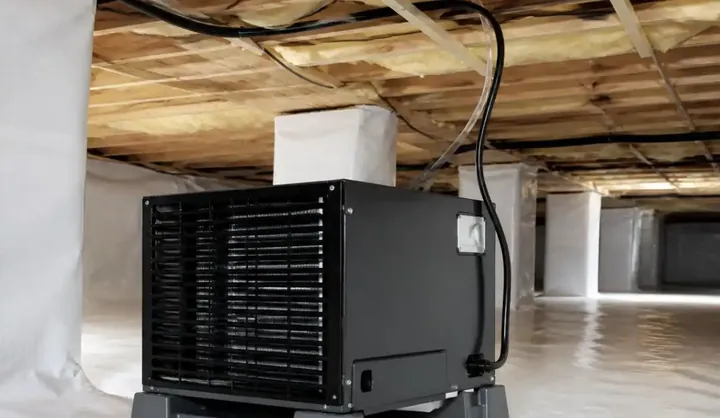
Crawl space encapsulation in Wappoo Heights
Wappoo Heights is a West Ashley neighborhood near Wappoo Creek, close to the routes that connect West Ashley to James Island and the peninsula. It is a residential area of mid-century homes on established lots, with convenient access to the rest of the city.
Its location near tidal creeks and marsh shapes its crawl spaces. Groundwater here moves with the tides, summer humidity is intense and houses built decades ago were not designed for those conditions. We help owners seal, drain and dry their crawl spaces.
What makes Wappoo Heights crawl spaces different
Marsh and creek proximity. Tidal water and marsh soils keep the ground wet and the air humid.
Mid-century builds. Most homes are from the 1950s and 1960s and use vented crawl spaces with minimal ground cover.
Low elevation in parts of the neighborhood. Some lots sit only slightly above tidal water.
Salt exposure. Salty air and brackish water speed up corrosion of metals in the crawl space.
Storm exposure. Hurricanes and strong storms bring surge and heavy rain that test every crawl space.
Homes in Wappoo Heights
Typical homes are one-story ranches, brick or frame, with simple rectangular footprints. Many have carports, converted garages and rear additions. Interiors have been updated over the years, while crawl spaces often remain as built.
Foundations are generally masonry walls and piers with foundation vents. Ducts, supply lines and drains run through the crawl space, and many show signs of moisture damage.
Water, soil and flood conditions in Wappoo Heights
Tidal groundwater. Water tables rise and fall with the tide and storms.
Standing water. Low sections of the neighborhood can hold water under houses.
Humid, salty air. Summer dew points in the 70s and salt in the air attack framing and metal.
Storm surge risk. Many properties are in mapped flood zones, and flooding can occur in major storms.
Slow-draining soils. Marsh-influenced soils drain poorly and stay wet.
Crawl space problems we see in Wappoo Heights
- Wet insulation and mold on joists
- Rusted ducts, straps and fasteners
- Standing water or perpetually damp soil
- Thin or failed plastic ground covers
- Rot at sills and joist ends
- Pest activity attracted by moisture
- Corroded plumbing and sweating pipes
- Musty smell and high indoor humidity
- Floors that feel cold or soft
What we usually recommend in Wappoo Heights
Water first. In this neighborhood, drainage and a sump pump are often part of the plan. See also waterproofing.
Cleanout, mold treatment and repair. See cleanout, mold remediation and crawl space repair.
Sealed system. Vapor barrier, vent sealing, dehumidifier and insulation.
Together, they make a complete crawl space encapsulation.
What an inspection and job look like in Wappoo Heights
The inspection. We check the lot first, because near the creek, the story is often about where the water is coming from and when, and then we go under the house to look at the soil, the walls and the framing. We take humidity and wood moisture readings, photograph the framing, piers, ducts and soil, and look for the source of any water. You see the photos and hear what we found in plain language before anything is quoted.
The written plan. You receive a scope that names each step, each material and the order of work. We discuss battery backup and discharge routing in the plan, since storms and outages are part of life near the marsh.
Cleanout, treatment and repairs. Debris and failed insulation come out, mold is treated and damaged wood is repaired. Corrosion is a constant concern here, so we note rusted ductwork and hangers and replace them where they have failed.
Drainage and water control. Where water collects or groundwater reaches the space, we install drainage and a sealed sump basin before anything is covered.
Sealing and conditioning. A reinforced liner goes down with sealed seams, vents and penetrations are closed and a dehumidifier sized to the space goes in, with insulation where the plan calls for it.
The walkthrough. We test the pump in front of you, show you the basin and explain what to check before hurricane season.
A closer look at Wappoo Heights
Wappoo Heights sits where West Ashley meets the creeks and marsh that separate it from James Island. The streets are residential, the lots are modest and the houses are mostly from the middle of the twentieth century. What sets it apart is the water. Tidal creeks are close, marsh soils are wet and the air carries salt.
That changes what we expect to find under a house. Metal corrodes faster, so rusted duct straps, plumbing hangers and fasteners are common. Soils stay saturated longer, so liner and drainage design matters more. Humidity is high even by Charleston standards, so dehumidifier capacity needs a little extra margin. Storm risk is real, so pumps, backups and discharge routes are more than an afterthought.
None of that makes encapsulation a bad idea here. It makes it an especially good one, provided it is designed for the conditions. A liner that is sealed, drained and conditioned does the job whether the creek is at low tide or high.
What to plan for before storm season
Homeowners near tidal water should treat the crawl space as part of their storm plan. Before hurricane season, test the sump pump by pouring water into the basin and confirming it runs and discharges away from the house. Make sure the discharge line is open and not buried or crushed. Consider a battery backup. Check that your dehumidifier is running and draining. Look at the liner for tears or lifted seams. Know where your engineered flood vents are, if you have them, and leave them alone.
After a storm, look at the crawl space as soon as it is safe. Standing water, a pump that has stopped or new staining are all reasons to call us early. Water that sits for days causes much more damage than water that is removed quickly.
A typical project in Wappoo Heights
A typical Wappoo Heights job starts with water. Even in houses that never see standing water, the soil is damp, the air is salty and the metal under the house is corroded. We begin by finding where moisture is coming from and how it is moving.
Cleanout and mold treatment follow, along with replacement of corroded hangers, straps and supports. Rotted sills and joist ends are repaired. If groundwater reaches the space, we install perimeter drainage and a sealed sump basin with a discharge line routed away from the house. Then the liner, vent sealing, insulation and dehumidifier go in. Because humidity is high here, we size the dehumidifier with a little extra margin.
The result is a crawl space that does not depend on the weather to stay dry. It is steady in July, steady after a storm and steady through king tides.
Keeping a Wappoo Heights crawl space healthy
Test the sump pump before every hurricane season. Keep the discharge line open and directed away from the house. Replace the dehumidifier filter on schedule. Look at metal components for rust, since salt air takes a toll. After storms, check the space as soon as it is safe, and call if you find standing water or a stopped pump.
What salt air does to a crawl space
Salt air is easy to forget about until you look at the metal under a house. Duct straps rust through, galvanized hangers crumble, screws bleed rust onto wood and old pipe fittings corrode at the joints. In Wappoo Heights, we regularly replace hardware that failed years before the wood did. When we encapsulate a space, we specify corrosion-resistant fasteners and supports where it matters, and we seal the space so salt-laden air stops circulating through it. That protects both the structure and the equipment inside.
Local rules and practical notes
Flood zones. Many Wappoo Heights properties are in mapped flood zones. Check requirements before altering engineered flood vents, and talk to your insurance agent about coverage questions.
Power outages. Storms cause outages. If you install a sump pump, ask about battery backup.
HOA and covenants. Work is below the floor and does not alter the exterior.
What crawl space work costs in Wappoo Heights
Cost depends on size, water entry, debris and repairs. Drainage adds to the project. We quote after inspection. See the cost guide. Nearby St. Andrews and Riverland Terrace have similar conditions.
Frequently asked questions
Can you keep my crawl space dry during a hurricane?
No system can promise that. We design for ordinary tidal and storm conditions and recommend battery backup for pumps.
Will salt air damage my liner?
Quality reinforced liners hold up well. Metals like ducts and hangers are more vulnerable.
Do I need drainage?
If water collects or soil stays wet, yes. We confirm at inspection.
What about mold?
We clean and treat it, then dry the space so it does not return.
Does flood insurance cover crawl space work?
Coverage varies. Ask your insurance agent.
How do I schedule an inspection?
Call (877) 720-8173.
Own a Wappoo Heights home? Call and we will inspect the crawl space.
Call (877) 720-8173