
What crawl space repair covers
The crawl space holds up your house. Beams, joists, subfloor, piers and posts carry the load of everything above, and they sit in the part of the home most exposed to moisture, soil movement and pests. When one component fails, it pushes load onto its neighbors, and the problem spreads.
Crawl space repair is the structural and material work that restores that system. It includes replacing or reinforcing damaged floor framing, repairing or replacing subfloor, stabilizing and replacing piers and posts, and addressing the moisture and pest conditions that caused the damage. We repair what is failing, tell you what we found and explain what it will take to make it last.
Why Charleston crawl spaces need repair
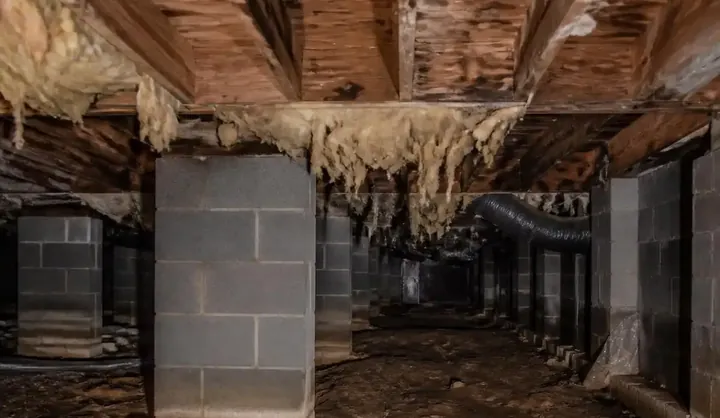
Moisture is the main cause. In the Lowcountry's humid climate, wood that stays damp loses strength. The sequence is predictable: humidity climbs, mold appears, wood fibers begin to soften, fungal decay sets in and the framing weakens.
Rot from long-term humidity. Wood that sits above 20 percent moisture content for extended periods is at risk of decay. Charleston crawl spaces can stay there for years.
Standing water and groundwater. Posts and joists that touch wet soil or sit in water rot from the bottom up.
Termites and wood-boring insects. Subterranean termites are common in the Lowcountry, and damp wood draws them. Some damage that looks like rot is insect damage.
Settling and shifting piers. Brick and block piers can crack, lean or sink over the decades, especially in older homes on soft or sandy soil. Failed piers leave beams and joists unsupported.
Failed plumbing and HVAC. Leaks and condensation from pipes and ducts soak wood in one area until it fails.
Past modifications. Notched joists, cut beams and removed supports from earlier plumbing or HVAC work weaken the structure.
Flooding and storm events. Water that reaches the framing can cause damage within weeks.
Signs your crawl space needs repair
Floors give the first warnings. Look for:
- Soft, spongy or bouncy spots in the floor
- Sagging or sloping floors
- Doors and windows that stick or no longer close properly
- Cracks in drywall, especially above doors and windows
- Gaps between baseboards and the floor
- Visible rot, crumbling wood or dark soft patches on joists and beams
- Piers that lean, crack or have shifted
- Termite tubes, damaged wood or frass
- A strong musty smell from the floor registers or around the baseboards
- Plumbing or ductwork that has dropped out of position
If you see any of these, an inspection should come before any cosmetic fix. Covering the symptom does not stop the cause.
Common crawl space repairs
Sistering joists. A damaged joist is reinforced by fastening a new full-length member alongside it. This is common and works well when the original is partly intact.
Joist and beam replacement. If rot or damage is severe, the member is replaced. Temporary supports hold the floor while the work is done.
Subfloor repair. Damaged sections of subfloor are cut out and replaced, sometimes from below and sometimes from above, depending on access and finishes.
Pier repair and replacement. Cracked or leaning piers are rebuilt, shimmed or replaced. Additional piers are added where spans are too long.
Post and support installation. New posts or adjustable steel supports restore support to sagging areas.
Termite damage repair. Damaged framing is replaced after the infestation has been treated by a licensed pest control provider.
Plumbing and duct support. Hangers and supports are installed so pipes and ducts are not pulling on the structure.
Leveling the floor. After supports are corrected, sagging floors can often be brought closer to level, within the limits of what the structure allows.
How we approach a repair
- Inspect everything. We look at the framing, subfloor, supports and piers, probe wood with a screwdriver, check moisture and note insect activity. We show you photos of what we find.
- Separate urgent from optional. Some damage needs fixing now. Some can wait or be monitored. We tell you which is which, and why.
- Find the cause. Repairing wood without correcting what damaged it guarantees a repeat. Moisture, pests and settlement are addressed in the plan.
- Write the scope. You receive a written plan that lists each repair and the materials.
- Support the structure. Temporary supports go in before damaged members come out.
- Repair and replace. Work is done with materials suited to a damp environment, including treated lumber where appropriate.
- Seal and protect. Once the structure is sound, we recommend encapsulation so the repaired framing stays dry.
Why repair comes before encapsulation
Sealing a crawl space with failing framing is wasted money. A liner, insulation and a dehumidifier do not strengthen rotted wood. Installing them over damaged framing also hides the problem and makes future repairs harder. Where we find structural issues, we recommend fixing them first and then protecting the result.
The reverse is also true. Repairing framing in a crawl space that still has the same moisture problem is a short-term fix. The wood will get damp again. The right sequence is cleanout, repairs, moisture control and then sealing. See also mold remediation and cleanout.
Old Charleston homes and special considerations
Charleston has some of the oldest wood-framed homes in the country, and many sit on foundations that were built to different standards. Brick piers laid in lime mortar, full-dimension lumber and unusual framing layouts are common. Repairs to historic homes should match the existing structure where possible and avoid damage to original material. In historic districts, work that affects the exterior may need review by the local design review board. We tell you when to check.
What crawl space repair costs in Charleston
Repair cost depends entirely on what we find. Replacing a few joists is a modest job. Rebuilding multiple piers, replacing beams and subfloor over a wide area is a major one. We do not quote repair prices over the phone, because the only honest number comes from looking at the framing. After inspection you receive a written scope with each item described. Our cost guide explains how repair fits with encapsulation pricing.
Why Charleston homeowners choose us for repairs
We are not a company that starts with a sales pitch. We get under the house, tell you what is failing and fix it before it doubles in cost. Our background in mold inspection and remediation means we recognize the connection between moisture, mold and structural damage, and our plans address all three. We work across Charleston, from the peninsula to West Ashley, James Island and Daniel Island.
Questions to ask before approving structural repairs
Repairs can be expensive, and homeowners deserve to understand what they are paying for.
- Can you show me photos and point out each damaged area?
- Which repairs are urgent, and which can wait?
- What caused the damage, and how will you stop it from happening again?
- What materials will be used, and are they suited to damp conditions?
- Is a permit needed, and who handles it?
- Do you coordinate with a pest control provider if termites are involved?
Common mistakes with crawl space repairs
Repairing the wood without fixing the moisture. New lumber in a damp crawl space rots on the same schedule as the old.
Covering damaged framing. Spray foam, liner or new flooring over rotted wood hides the problem.
Fixing the floor instead of the support. Leveling a floor without addressing sinking piers or failed beams is temporary.
Ignoring termite activity. Replacing damaged wood before treating an active infestation invites more damage.
Waiting. Small repairs cost much less than big ones, and crawl space damage compounds over time.
Documenting damage for your records
Structural repairs often matter to more than the homeowner. Lenders, insurers and future buyers may all ask what was found and what was done. We photograph damage before repairs, during the work and after completion, and we describe each repair in writing. That documentation protects you and makes it easier to answer questions down the road. Keep a copy with your home records, together with the scope and any receipts for materials.
Frequently asked questions
How do I know if my floor problem is a crawl space problem?
Soft spots, sagging, bounce, sticking doors and cracked drywall are all common signs. An inspection under the house confirms whether the cause is in the framing, the piers or the soil.
Is rot always expensive to fix?
Not always. Localized rot in a few joists is a modest repair. Widespread damage costs more, and catching it early keeps it small.
Can you repair termite damage?
We repair the structural damage. Termite treatment itself should be done by a licensed pest control provider, and we coordinate with your provider.
Do you lift and level floors?
We can correct supports and bring floors closer to level where the structure allows. Floors that have sagged for decades may not return fully flat.
Do I need a permit?
Some structural repairs may require permits depending on scope and the local jurisdiction. We discuss this with you when we write the scope.
Should I repair first or encapsulate first?
Repair first. Then protect the repaired structure with encapsulation.
Soft floor or sticking doors? Call and we will crawl under and tell you what is failing.
Call (877) 720-8173